
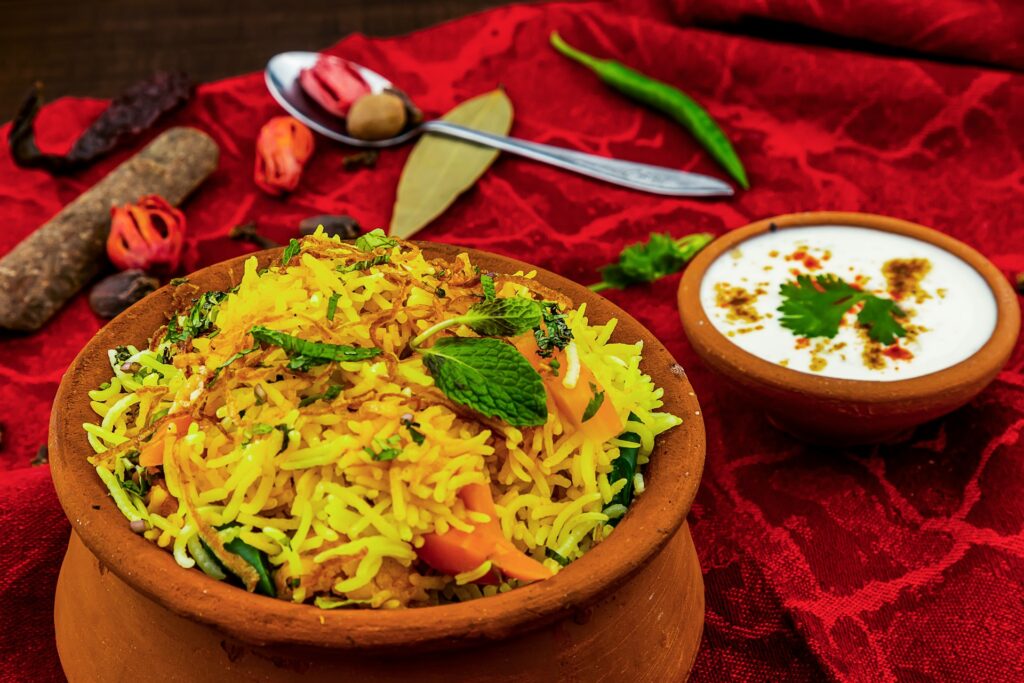
Across South Asia, a few things are non-negotiable: the authority of one’s mother, the perfect cup of chai, and, without any question, biryani.
But biryani is more than just food. It’s the dish that sparks debates, ends diets, brings families together, and divides WhatsApp groups. Each region defends its version passionately. And yet, at any gathering, most people will gladly eat whichever biryani is served.
So, what makes this rice-and-meat dish so universally beloved? And for the 44+ million South Asians living abroad, now with 24/7 access to biryani thanks to food delivery apps, what does it mean for health and cultural connection?
Let’s take a closer look.
Regional Rivalries and Rich Traditions
India: A Biryani for Every Mood
● Hyderabadi Biryani is rich, spicy, and slow-cooked in the dum style.
● Lucknowi Biryani is subtle, aromatic, and elegant.
● Kolkata Biryani includes egg and potato, which is not a compromise, but a signature. ● Malabar Biryani reflects coastal influences, with coconut and curry leaves. ● Bombay Biryani is bold, tangy, and complex, just like the city itself.
Typical calorie range: 700–1,200 per serving (assuming one serving, which is rarely the case).
Pakistan: Biryani as a National Identity
● Sindhi Biryani is fiery and tangy, known for its bold flavours.
● Karachi Biryani is greasy, spicy, and deeply comforting.
● Homestyle Biryani varies from family to family, with recipes passed down through generations.
Common ingredients include oil, deep-fried onions, full-fat yoghurt, and fatty cuts of meat, making it a flavorful but often heavy meal.
Bangladesh: The Kingdom of Kacchi
● Dhaka Kacchi Biryani features raw marinated meat layered with rice, potatoes, and spices, sealed with dough and slow-cooked. It’s reserved for weddings, festivals, and moments when food becomes a statement.
The taste is unmatched, but it’s far from light, often cooked with multiple cups of oil. Nepal: A Simpler, Comforting Take
● Nepali biryani is less traditional but deeply personal. Loosely inspired by Indian styles, it’s commonly made at home or enjoyed among students and friends. Customizable and comforting, it’s biryani with a casual flair.
Sri Lanka: Spice Meets Intensity
Often called “buryani”
● They are intensely spiced and paired with curried eggplant, seeni sambol (a caramelised onion relish), and chilli sambal. The rice is vibrant, the flavours deep, and the spice level unapologetic.
Biryani Abroad: A Blessing and a Dilemma
For the South Asian diaspora, biryani is no longer limited to weekends or special occasions. From New Jersey to London, Dubai to Sydney, biryani is just a tap away. But this constant availability can lead to overindulgence, especially when paired with large portions and sedentary routines.
What’s Really in a Plate of Biryani?
A single traditional biryani meal with meat, rice, oil, and garnishes can contain: 800 to 1,200+ calories
50 to 70 grams of fat
Around 100 grams of refined carbohydrates
High sodium, low fibre
And often, the need for a nap immediately after
Add yoghurt-based sides, a sweet drink, and dessert, and you may easily exceed your daily caloric needs in one sitting.
Is Biryani Always “Unhealthy”?
Not at all. The issue isn’t with biryani itself, but with how and how often we consume it. Instead of guilt, what we need is a mindful approach.
At SA Wellness, we believe that cultural foods should never be demonised. They deserve to be celebrated and adjusted thoughtfully to meet your current health goals.
How to Eat Biryani Without Derailing Your Health
1. Choose Leaner Meats
Opt for chicken instead of beef or mutton. Avoid oily, fatty cuts if you’re managing cholesterol or weight.
2. Balance the Plate
Add a side of fresh salad or raita made with plain yoghurt and cucumber. This improves fibre intake and supports digestion.
3. Adjust the Rice-to-Protein Ratio
Serve yourself more protein and vegetables than rice. This helps manage blood sugar and keeps you fuller for longer.
4. Limit Fried Onions
They add flavour but also absorb a significant amount of oil. Use them sparingly. 5. Eat It Earlier in the Day
Lunch is a better time than dinner to have biryani, giving your body more time to digest and burn the calories.
6. Move After the Meal
A short walk, maybe just 15 minutes after eating, can help regulate blood sugar and reduce post-meal sluggishness.
Make biryani your life, not a Life Sentence.
At SA Wellness, our approach is rooted in balance, not restriction. Biryani is tied to tradition, joy, family, and emotion. It’s part of who we are. But even the most beloved foods need context in a lifestyle that prioritises health.
The real concerns aren’t biryani itself, but oversized portions, emotional eating, and inactivity afterwards.
So yes, enjoy your biryani. Savour every bite. Share the experience. Just try not to eat three full plates while scrolling through your phone at 10 p.m.